
Football has 17 official Laws, written by a body called the IFAB. The problem? They're written in careful, legal-ish language that can leave a new fan more confused than before. So here's our approach: for each one, we'll give you the actual rule — the real thing, not a watered-down version — and then translate it into plain English so you know exactly what you're watching.
We've focused on the moments that most often leave people asking "wait, why did that happen?" — offside, the linesman's flag, handball, added time and the rest. Master these and you'll follow any match with confidence.
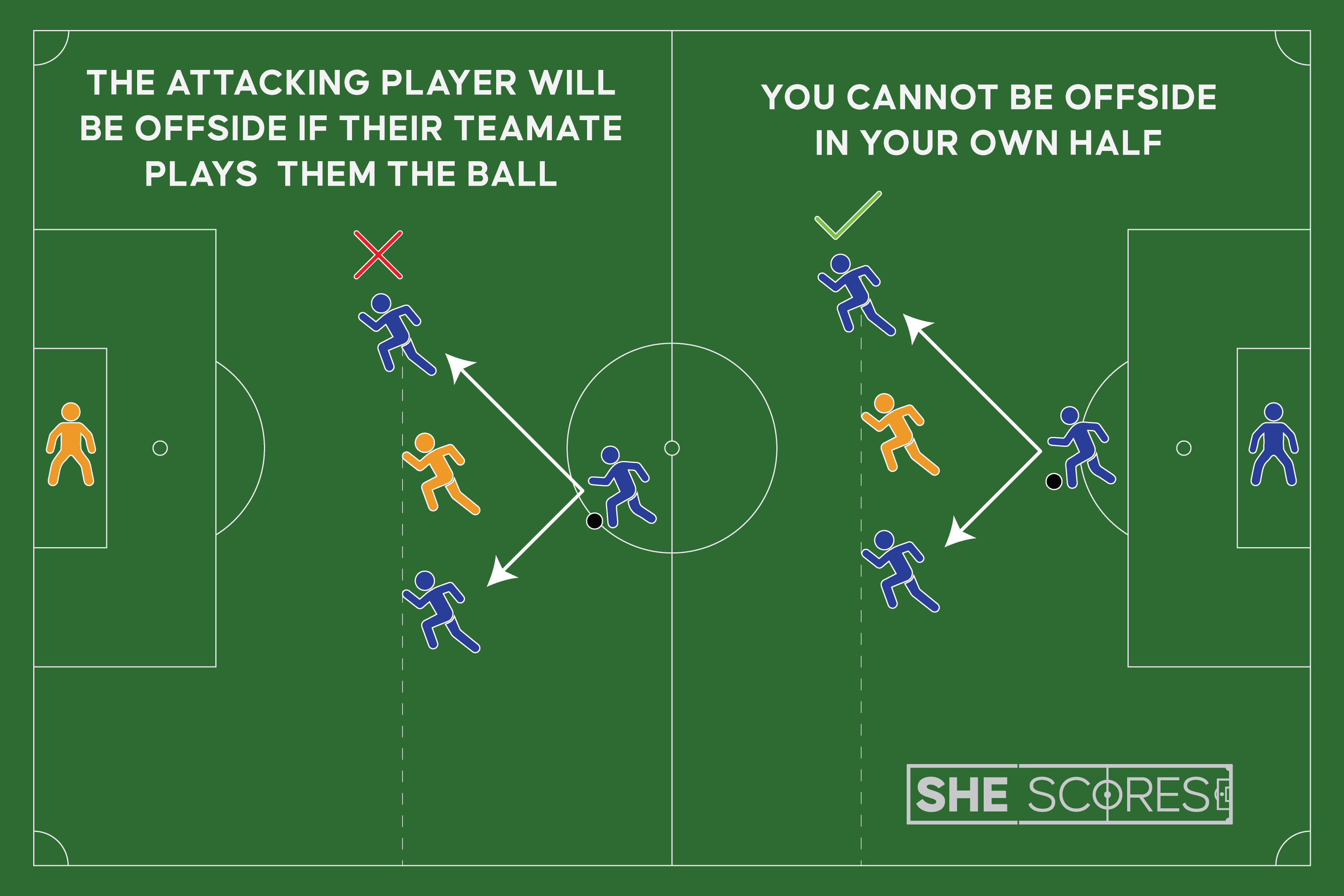
The official rule: A player is in an offside position if any part of the head, body or feet that they can legally score with is nearer to the opponents' goal line than both the ball and the second-last opponent (usually the last defender, since the goalkeeper is often the very last). Being in an offside position is only an offence if, at the moment a teammate plays the ball, that player then becomes involved in active play — by interfering with play, interfering with an opponent, or gaining an advantage from being there.
In plain English: You can't just hang around behind the last defender waiting for a pass. At the exact moment your teammate kicks the ball, you must have at least one defender (the goalkeeper usually counts as one) between you and the goal — otherwise you're offside. Two things trip people up. First, it's judged at the moment the ball is played, not when you receive it — that's why a player can look level with a defender but still be flagged. Second, being offside is only punished if you're actually involved in the move. Stand in an offside spot but jog away and don't touch the ball? No offence. It's only when you affect play that the flag goes up. You cannot be offside in your own half.
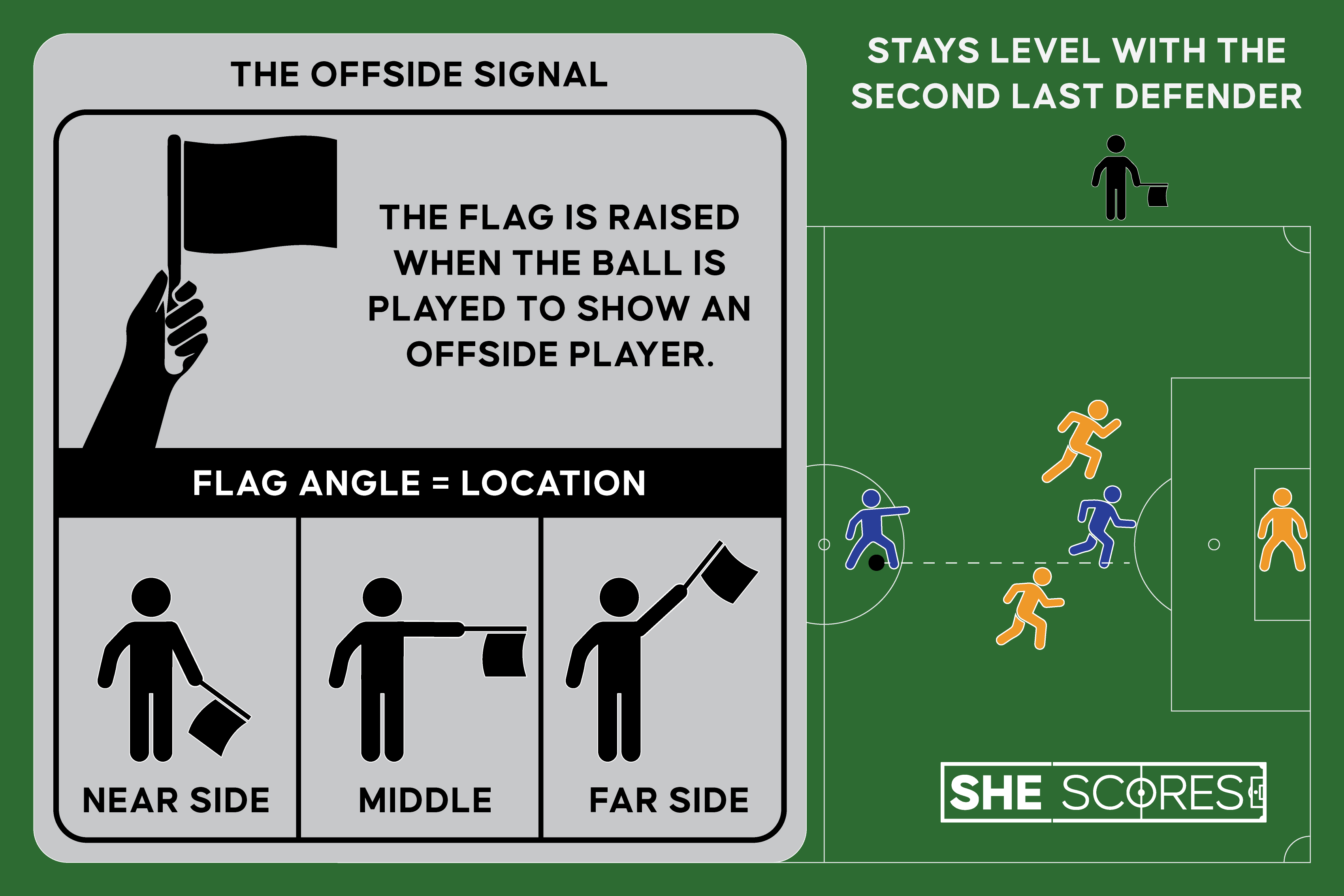
The official rule: The assistant referee (the "linesman") runs the touchline in line with the second-last defender and raises the flag to signal offside, among other decisions. The referee then makes the final call.
In plain English: The assistant referee is your best friend for understanding offside. They stay level with the last line of defenders, so when they raise the flag straight up, they're saying "offside — the attacker was ahead of the last defender when the ball was played." The angle of the flag even tells you where on the pitch the offside happened: held high and out means far side, lower means near side. When you see that flag go up and play stops, you now know exactly what just happened — no need to wait for the replay.
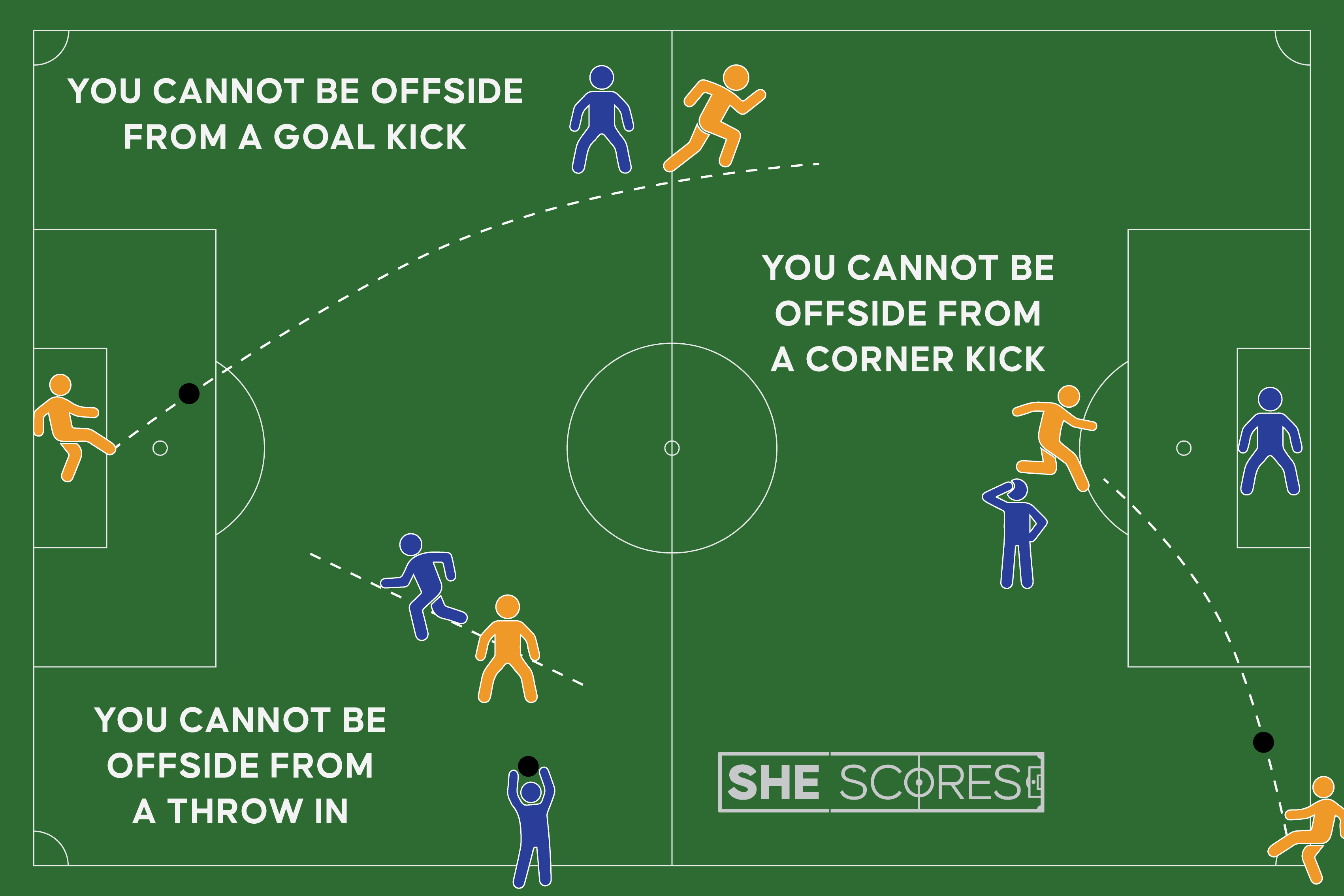
The official rule: There is no offside offence if a player receives the ball directly from a goal kick, a corner kick, or a throw-in.
In plain English: This is the one that catches everyone out. You cannot be offside straight from a goal kick, a corner, or a throw-in — full stop. So if you see an attacker standing miles beyond the defenders as a corner comes in and nobody flags it, that's not a mistake: offside simply doesn't apply from those three restarts. It's why teams can pack the box at corners without worrying about the offside line. The moment the ball is then touched by another player in open play, though, normal offside rules switch back on.
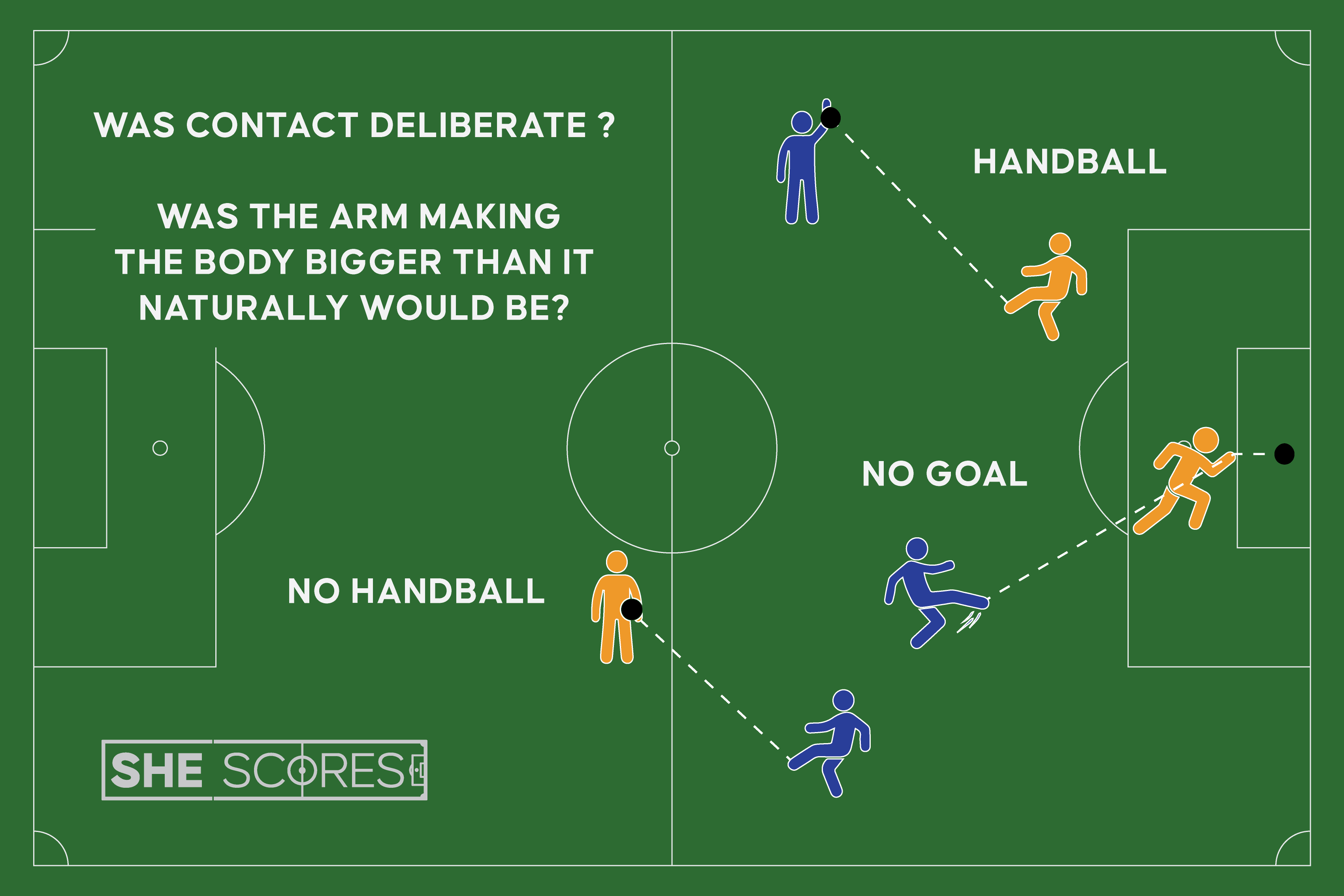
The official rule: It's an offence if a player deliberately touches the ball with their hand or arm, or if they make their body "unnaturally bigger" with the arm and the ball strikes it. A goal scored directly off the hand or arm — even accidentally — is disallowed, as is a goal scored immediately after the ball comes off your own hand or arm. But accidental contact that isn't in any of those categories is not automatically an offence.
In plain English: Not every ball hitting an arm is a handball — this is the source of endless arguments. The referee is really asking two questions: was it deliberate, and was the arm making the body bigger than it naturally would be? An arm tucked in by your side that the ball smashes into from close range is usually fine. An arm stuck out wide or raised above the shoulder is usually punished, because you've made yourself bigger. The one hard rule: if the ball goes in off your hand or arm, the goal doesn't count, even if it was a total accident. Defenders and attackers are judged slightly differently, but "deliberate or unnaturally big" is the test to remember.
The official rule: The referee may allow play to continue when the team that was fouled would benefit more from playing on than from stopping for a free kick. If the expected advantage doesn't materialise within a few seconds, the referee can bring play back and award the original free kick.
In plain English: Sometimes you'll see a clear foul, but instead of blowing the whistle the referee sweeps both arms forward and shouts "play on." That's the advantage rule. They've decided the fouled team is actually better off keeping the ball — maybe they've broken through on goal — so stopping for a free kick would only help the team that committed the foul. If the attack breaks down within a few seconds, the ref can still call it back and give the free kick. It's the referee letting the game flow instead of rewarding the offender.
The official rule: The referee adds time at the end of each half to compensate for all time lost through substitutions, injuries and their assessment, time-wasting, celebrations, disciplinary stoppages and any other cause. The fourth official signals the minimum amount to be played.
In plain English: Football's clock never stops, so every delay during the half — goal celebrations, subs, injuries, players dawdling over throw-ins — gets tallied up and tacked onto the end. The number the fourth official holds up is the minimum, not a strict limit; the ref can play a little beyond it if there are further stoppages. You've probably noticed added time has grown in recent years — that's a deliberate push to claw back time genuinely lost, so there's more actual football in each 90 minutes.
The official rule: Barring certain exceptions, a player who receives on-field assessment or treatment, or who causes play to be stopped through injury, must leave the field and stay off for a set period after play restarts.
In plain English: If a player goes down and needs the physio on the pitch, they generally have to come off briefly once play resumes — for about a minute — leaving their team temporarily a player short. It's designed to discourage players from going down to waste time or break up the opposition's momentum, since doing so now costs their own team. Exceptions apply (like a goalkeeper, or an injury caused by a booking), but as a rule: treatment on the pitch means a short spell on the sidelines.
Indirect free kick: a free kick that can't go straight into the goal — someone else has to touch it first. The referee signals it by holding one arm straight up until the ball's touched by a second player. Given for offences like offside or dangerous play.
Drop ball: how the referee restarts play when they've stopped it for something that isn't a foul (an injury, or the ball hitting the ref). The ball is dropped for one player of the team that last touched it, and everyone else has to stand back.
Clean sheet: not a Law, but you'll hear it constantly — it just means a team (or goalkeeper) got through the whole match without conceding a goal.
That's the toolkit. None of these need a rulebook open beside you once they click — and the next time someone near you groans "how was that not offside?", you'll be the one who can explain it.